HOME
SIGN UP LOGIN
https://1828.mshaffer.com
Wednesday - December 3, 2025

In my view, the Christian religion is the most important and one of the first things in which all children, under a free government ought to be instructed... No truth is more evident to my mind than that the Christian religion must be the basis of any government intended to secure the rights and privileges of a free people.
- Preface

1828 Noah Webster Dictionary
  A B C D E F G H I J K L M N O P Q R S T U V W X Y Z   <3

Search, browse, and study this dictionary to learn more about the early American, Christian language.

1828.mshaffer.comWord [species]

0
0
Cite this! Share Definition on Facebook Share Definition on Twitter Simple Definition Word-definition Evolution

species

SPECIES, n. spe'shiz. [L. from specio, to see. See Special.]

1. In zoology, a collection of organized beings derived from one common parentage by natural generation, characterized by one peculiar from one common parentage by natural generation, characterized by one peculiar form, liable to vary within certain narrow limits. These accidental and limited variations are varieties. Different races from the same parents are called varieties.

2. In botany, all the plants which spring from the same see, or which resemble each other in certain character or in variable forms. There are as many species as there are different in variable forms or circumstances only with in certain narrow limits. These accidental and limited variations are varieties. Different races from the same parents are called varieties.

3. In logic, a special idea, corresponding to the specific distinctions of things in nature.

4. Sort; kind; in a loose sense; as a species of low cunning in the world; as a species of generosity; a species of cloth.

5. Appearance to the senses; visible or sensible representation. An apparent diversity between the species visible and audible, is that the visible doth not mingle in the medium, but the audible doth. The species of letters illuminated with indigo and violet. [Little used.]

6. Representation to the min. Wit-the faculty of imagination in the writer, which searches over all the memory for the species or ideas of those things which it designs to present. [Little used.]

7. Show; visible exhibition. Shows and species serve best with the common people. [Not in use.]

8. Coin, or coined silver and gold, used as a circulating medium; as the current species of Europe. In modern practice. this word is contracted into specie. What quantity of specie has the bank in its vault? What is the amount of all the current specie in the country? What is the value in specie, of a bill of exchange? We receive payment for goods in specie, not in bank notes.

9. In pharmacy, a simple; a component part of a compound medicine.

10. The old pharmaceutical term for powders.


Evolution (or devolution) of this word [species]

1828 Webster1844 Webster1913 Webster

SPECIES, n. spe'shiz. [L. from specio, to see. See Special.]

1. In zoology, a collection of organized beings derived from one common parentage by natural generation, characterized by one peculiar from one common parentage by natural generation, characterized by one peculiar form, liable to vary within certain narrow limits. These accidental and limited variations are varieties. Different races from the same parents are called varieties.

2. In botany, all the plants which spring from the same see, or which resemble each other in certain character or in variable forms. There are as many species as there are different in variable forms or circumstances only with in certain narrow limits. These accidental and limited variations are varieties. Different races from the same parents are called varieties.

3. In logic, a special idea, corresponding to the specific distinctions of things in nature.

4. Sort; kind; in a loose sense; as a species of low cunning in the world; as a species of generosity; a species of cloth.

5. Appearance to the senses; visible or sensible representation. An apparent diversity between the species visible and audible, is that the visible doth not mingle in the medium, but the audible doth. The species of letters illuminated with indigo and violet. [Little used.]

6. Representation to the min. Wit-the faculty of imagination in the writer, which searches over all the memory for the species or ideas of those things which it designs to present. [Little used.]

7. Show; visible exhibition. Shows and species serve best with the common people. [Not in use.]

8. Coin, or coined silver and gold, used as a circulating medium; as the current species of Europe. In modern practice. this word is contracted into specie. What quantity of specie has the bank in its vault? What is the amount of all the current specie in the country? What is the value in specie, of a bill of exchange? We receive payment for goods in specie, not in bank notes.

9. In pharmacy, a simple; a component part of a compound medicine.

10. The old pharmaceutical term for powders.

SPE-CIES, n. [spe'shiz; L. from specio, to see. See Special.]

  1. In zoology and botany, all individuals that are precisely alike in every character not capable of change by any accidental circumstances, and capable of uniform, invariable, and permanent continuance by natural propagation. All changes produced by accidental causes, in individuals of a species, and which are not capable of uniform, invariable, and permanent continuance by natural propagation, indicate und mark what are called varieties. There are as many species as there are different invariable forms or structures of vegetables. – Martyn.
  2. In logic, a special idea, corresponding to the specific distinctions of things in nature. – Watts.
  3. Sort; kind; in a loose sense; as, a species of low cunning in the world; a species of generosity; a species of cloth.
  4. Appearance to the senses; visible or sensible representation. An apparent diversity between the species visible and audible, is that the visible doth not mingle in the medium, but the audible doth. – Bacon. The species of letters illuminated with indigo and violet. [Little used.] – Newton.
  5. Representation to the mind. Wit … the faculty of imagination in the writer, which searches over all the memory for the species or ideas of those things which it designs to represent. [Little used.] – Dryden.
  6. Show; visible exhibition. Shows and species serve best with the common people. [Not in use.] – Bacon.
  7. Coin, or coined silver and gold, used as a circulating medium; as, the current species of Europe. – Arbuthnot. In modern practice, this word is contracted into specie. What quantity of specie has the bank in its vault? What is the amount of all the current specie in the country? What is the value in specie, of a bill of exchange? We receive payment for goods in specie, not in bank notes.
  8. In pharmacy, a simple; a component part of a compound medicine. – Johnson. Quincy.
  9. The old pharmaceutical term for powders. – Parr.

Spe"cies
  1. Visible or sensible presentation] appearance; a sensible percept received by the imagination; an image.

    [R.] "The species of the letters illuminated with indigo and violet." Sir I. Newton.

    Wit, . . . the faculty of imagination in the writer, which searches over all the memory for the species or ideas of those things which it designs to represent. Dryden.

    * In the scholastic philosophy, the species was sensible and intelligible. The sensible species was that in any material, object which was in fact discerned by the mind through the organ of perception, or that in any object which rendered it possible that it should be perceived. The sensible species, as apprehended by the understanding in any of the relations of thought, was called an intelligible species. "An apparent diversity between the species visible and audible is, that the visible doth not mingle in the medium, but the audible doth." Bacon.

  2. A group of individuals agreeing in common attributes, and designated by a common name; a conception subordinated to another conception, called a genus, or generic conception, from which it differs in containing or comprehending more attributes, and extending to fewer individuals. Thus, man is a species, under animal as a genus; and man, in its turn, may be regarded as a genus with respect to European, American, or the like, as species.
  3. In science, a more or less permanent group of existing things or beings, associated according to attributes, or properties determined by scientific observation.

    * In mineralogy and chemistry, objects which possess the same definite chemical structure, and are fundamentally the same in crystallization and physical characters, are classed as belonging to a species. In zoölogy and botany, a species is an ideal group of individuals which are believed to have descended from common ancestors, which agree in essential characteristics, and are capable of indefinitely continued fertile reproduction through the sexes. A species, as thus defined, differs from a variety or subspecies only in the greater stability of its characters and in the absence of individuals intermediate between the related groups.

  4. A sort; a kind; a variety; as, a species of low cunning; a species of generosity; a species of cloth.
  5. Coin, or coined silver, gold, ot other metal, used as a circulating medium; specie.

    [Obs.]

    There was, in the splendor of the Roman empire, a less quantity of current species in Europe than there is now. Arbuthnot.

  6. A public spectacle or exhibition.

    [Obs.] Bacon.
  7. A component part of compound medicine; a simple.

    (b) (Med.)
  8. The form or shape given to materials; fashion or shape; form; figure.

    Burill.

    Incipient species (Zoöl.), a subspecies, or variety, which is in process of becoming permanent, and thus changing to a true species, usually by isolation in localities from which other varieties are excluded.

1828 Webster1844 Webster1913 Webster

Thank you for visiting!

  • Our goal is to try and improve the quality of the digital form of this dictionary being historically true and accurate to the first American dictionary. Read more ...
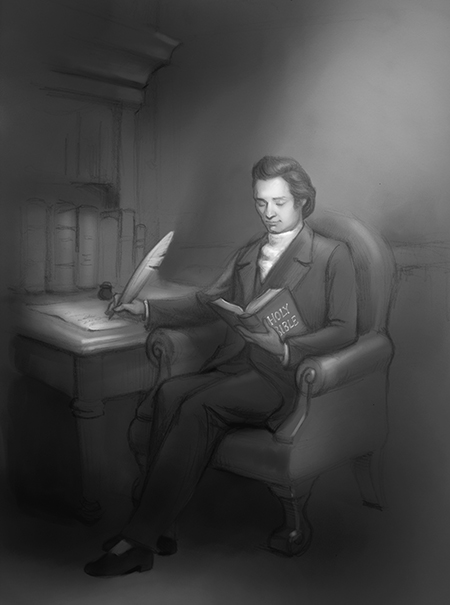
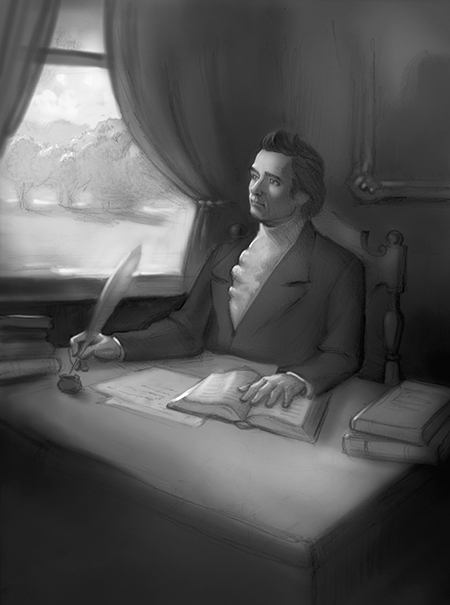
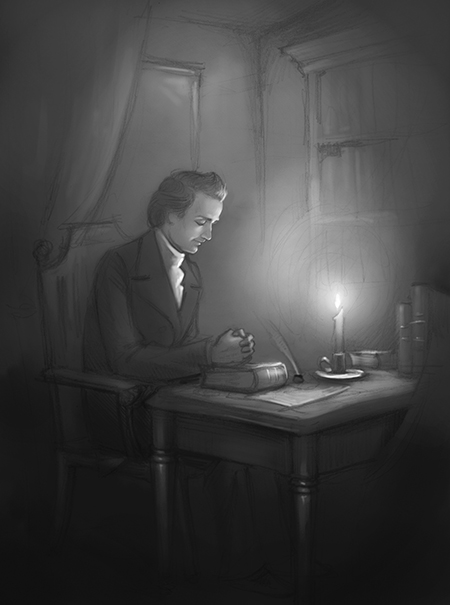
  • Below you will find three sketches from a talented artist and friend depicting Noah Webster at work. Please tell us what you think.
Divine Study
  • Divine StudyDivine Study
    Divine Study
Window of Reflection
  • Window of ReflectionWindow of Reflection
    Window of Reflection
Enlightening Grace
  • Enlightening GraceEnlightening Grace
    Enlightening Grace

159

932

111

1018

186

1046
Species

SPECIES, noun spe'shiz. [Latin from specio, to see. See Special.]

1. In zoology, a collection of organized beings derived from one common parentage by natural generation, characterized by one peculiar from one common parentage by natural generation, characterized by one peculiar form, liable to vary within certain narrow limits. These accidental and limited variations are varieties. Different races from the same parents are called varieties.

2. In botany, all the plants which spring from the same see, or which resemble each other in certain character or in variable forms. There are as many species as there are different in variable forms or circumstances only with in certain narrow limits. These accidental and limited variations are varieties. Different races from the same parents are called varieties.

3. In logic, a special idea, corresponding to the specific distinctions of things in nature.

4. Sort; kind; in a loose sense; as a species of low cunning in the world; as a species of generosity; a species of cloth.

5. Appearance to the senses; visible or sensible representation. An apparent diversity between the species visible and audible, is that the visible doth not mingle in the medium, but the audible doth. The species of letters illuminated with indigo and violet. [Little used.]

6. Representation to the min. Wit-the faculty of imagination in the writer, which searches over all the memory for the species or ideas of those things which it designs to present. [Little used.]

7. Show; visible exhibition. Shows and species serve best with the common people. [Not in use.]

8. Coin, or coined silver and gold, used as a circulating medium; as the current species of Europe. In modern practice. this word is contracted into specie. What quantity of specie has the bank in its vault? What is the amount of all the current specie in the country? What is the value in specie, of a bill of exchange? We receive payment for goods in specie, not in bank notes.

9. In pharmacy, a simple; a component part of a compound medicine.

10. The old pharmaceutical term for powders.

Why 1828?

Word of the Day

importance

IMPORT'ANCE, n.

1. Weight; consequence; a bearing on some interest; that quality of any thing by which it may affect a measure, interest or result. The education of youth is of great importance to a free government. A religious education is of infinite importance to every human being.

2. Weight or consequence in the scale of being.

Thy own importance know.

Nor bound thy narrow views to things below.

3. Weight or consequence in self-estimation.

He believes himself a man of importance.

4. Thing implied; matter; subject; importunity. [In these senses, obsolete.]

Random Word

natural

NATURAL, a. [to be born or produced]

1. Pertaining to nature; produced or effected by nature, or by the laws of growth, formation or motion impressed on bodies or beings by divine power. Thus we speak of the natural growth of animals or plants; the natural motion of a gravitating body; natural strength or disposition; the natural heat of the body; natural color; natural beauty. In this sense, natural is opposed to artificial or acquired.

2. According to the stated course of things. Poverty and shame are the natural consequences of certain vices.

3. Not forced; not far fetched; such as is dictated by nature. The gestures of the orator are natural.

4. According to the life; as a natural representation of the face.

5. Consonant to nature.

Fire and warmth go together, and so seem to carry with them as natural an evidence as self-evident truths themselves.

6. Derived from nature, as opposed to habitual. The love of pleasure is natural ; the love of study is usually habitual or acquired.

7. Discoverable by reason; not revealed; as natural religion.

8. Produced or coming in the ordinary course of things, or the progress or animals and vegetables; as a natural death; opposed to violent or premature.

9. Tender; affectionate by nature.

10. Unaffected; unassumed; according to truth and reality.

What can be more natural than the circumstances of the behavior of those women who had lost heir husbands on this fatal day?

11. Illegitimate; born out of wedlock; as a natural son.

12. Native; vernacular; as ones natural language.

13. Derived from the study of the works or nature; as natural knowledge.

14. A natural note, in music, is that which is according to the usual order of the scale; opposed to flat and sharp notes, which are called artificial.

Natural history, in its most extensive sense, is the description of whatever is created, or of the whole universe, including the heavens and the earth, and all the productions of the earth. But more generally, natural history is limited to a description of the earth and its productions, including zoology, botany, geology, mineralogy, meteorology, & c.

Natural philosophy, the science of material natural bodies, of their properties, powers and motions. It is distinguished from intellectual and moral philosophy, which respect the mind or understanding of man and the qualities of actions. Natural philosophy comprehends mechanics, hydrostatics, optics, astronomy, chimistry, magnetism, eletricity, galvanism, & c.

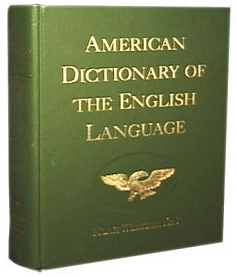
Noah's 1828 Dictionary

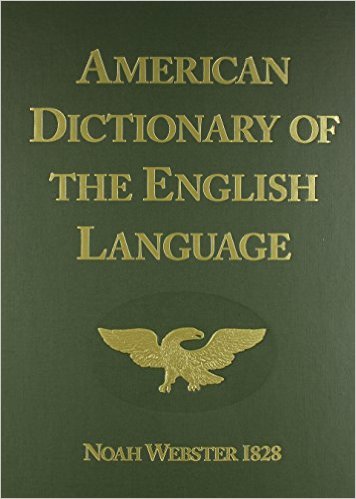
First dictionary of the American Language!

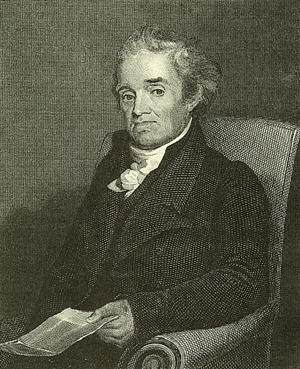
Noah Webster, the Father of American Christian education, wrote the first American dictionary and established a system of rules to govern spelling, grammar, and reading. This master linguist understood the power of words, their definitions, and the need for precise word usage in communication to maintain independence. Webster used the Bible as the foundation for his definitions.

This standard reference tool will greatly assist students of all ages in their studies.

No other dictionary compares with the Webster's 1828 dictionary. The English language has changed again and again and in many instances has become corrupt. The American Dictionary of the English Language is based upon God's written word, for Noah Webster used the Bible as the foundation for his definitions. This standard reference tool will greatly assist students of all ages in their studies. From American History to literature, from science to the Word of God, this dictionary is a necessity. For homeschoolers as well as avid Bible students it is easy, fast, and sophisticated.


Regards,


monte

{x:

Project:: 1828 Reprint


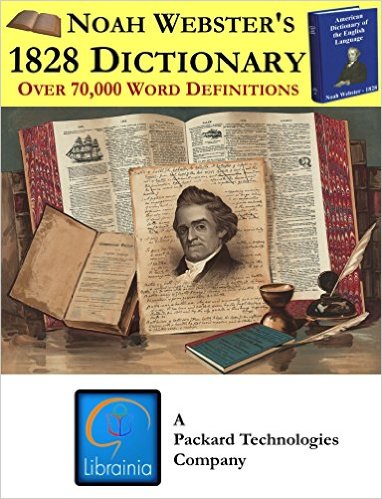
Hard-cover Edition

367

540

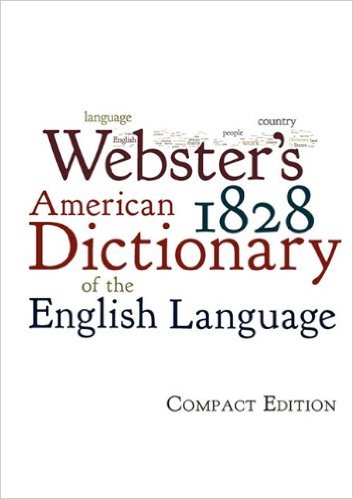
Compact Edition

352

242

CD-ROM

303

192

* As a note, I have purchased each of these products. In fact, as we have been developing the Project:: 1828 Reprint, I have purchased several of the bulky hard-cover dictionaries. My opinion is that the 2000-page hard-cover edition is the only good viable solution at this time. The compact edition was a bit disappointing and the CD-ROM as well.


[ + ]
Add Search To Your Site


Our goal is to convert the facsimile dictionary (PDF available: v1 and v2) to reprint it and make it digitally available in several formats.

Overview of Project

  1. Image dissection
  2. Text Emulation
  3. Dictionary Formatting
  4. Digital Applications
  5. Reprint

Please visit our friends:

{ourFriends}

Learn more about U.S. patents:

{ourPatent}

Privacy Policy

We want to provide the best 1828 dictionary service to you. As such, we collect data, allow you to login, and we want your feedback on other features you would like.

For details of our terms of use, please read our privacy policy here.

Page loaded in 4.329 seconds. [1828: 22, T:0]


1828 Noah Webster Dictionary

^ return to top
Back to Top