|
Search, browse, and study this dictionary to learn more about the early American, Christian language. 
1828.mshaffer.com › Word [mind]
MIND, n. [L. reminiscor; L. mens; Gr. memory, mention, to remember, mind, ardor of mind, vehemence; anger. Mind signifies properly intention, a reaching or inclining forward to an object, from the primary sense of extending, stretching or inclining, or advancing eagerly, pushing or setting forward, whence the Greek sense of the word, in analogy with the Teutonic mod, moed, muth, mind, courage, spirit, mettle. So L. animus, animosus.] 1. Intention; purpose; design. The sacrifice of the wicked is abomination; how much more, when he bringeth it with a wicked mind. Prov.21.2. Inclination; will; desire; a sense much used, but expressing less than settled purpose; as in the common phrases, "I wish to know your mind;" "let me know your mind;" "he had a mind to go;" "he has a partner to his mind."3. Opinion; as, to express one's mind. We are of one mind.4. Memory; remembrance; as, to put one in mind; to call to mind; the fact is out of my mind; time out of mind. From the operations of the intellect in man,this word came to signify.5. The intellectual or intelligent power in man; the understanding; the power that conceives, judges or reasons. I fear I am not in my perfect mind.So we speak of a sound mind, a disordered mind, a weak mind, a strong mind, with reference to the active powers of the understanding; and in a passive sense, it denotes capacity, as when we say, the mind cannot comprehend a subject.6. The heart or seat of affection. Which were a grief of mind to Isaac and Rebekah. Gen.26.7. The will and affection; as readiness of mind. Acts.17.8. The implanted principle of grace. Rom.7.MIND, v.t. To attend to; to fix the thoughts on; to regard with attention. Cease to request me; let us mind our way. Mind not high things. Rom.12.1. To attend to or regard with submission; to obey. His father told him to desist, but he would not mind him.2. To put in mind; to remind.3. To intend; to mean.MIND, v.i. To be inclined or disposed to incline. When one of them mindeth to go into rebellion.
|
Evolution (or devolution) of this word [mind]
| 1828 Webster | 1844 Webster | 1913 Webster |
|---|
MIND, n. [L. reminiscor; L. mens; Gr. memory, mention, to remember, mind, ardor of mind, vehemence; anger. Mind signifies properly intention, a reaching or inclining forward to an object, from the primary sense of extending, stretching or inclining, or advancing eagerly, pushing or setting forward, whence the Greek sense of the word, in analogy with the Teutonic mod, moed, muth, mind, courage, spirit, mettle. So L. animus, animosus.] 1. Intention; purpose; design. The sacrifice of the wicked is abomination; how much more, when he bringeth it with a wicked mind. Prov.21.2. Inclination; will; desire; a sense much used, but expressing less than settled purpose; as in the common phrases, "I wish to know your mind;" "let me know your mind;" "he had a mind to go;" "he has a partner to his mind."3. Opinion; as, to express one's mind. We are of one mind.4. Memory; remembrance; as, to put one in mind; to call to mind; the fact is out of my mind; time out of mind. From the operations of the intellect in man,this word came to signify.5. The intellectual or intelligent power in man; the understanding; the power that conceives, judges or reasons. I fear I am not in my perfect mind.So we speak of a sound mind, a disordered mind, a weak mind, a strong mind, with reference to the active powers of the understanding; and in a passive sense, it denotes capacity, as when we say, the mind cannot comprehend a subject.6. The heart or seat of affection. Which were a grief of mind to Isaac and Rebekah. Gen.26.7. The will and affection; as readiness of mind. Acts.17.8. The implanted principle of grace. Rom.7.MIND, v.t. To attend to; to fix the thoughts on; to regard with attention. Cease to request me; let us mind our way. Mind not high things. Rom.12.1. To attend to or regard with submission; to obey. His father told him to desist, but he would not mind him.2. To put in mind; to remind.3. To intend; to mean.MIND, v.i. To be inclined or disposed to incline. When one of them mindeth to go into rebellion. |
MIND, n. [Sax. gemind, gemynde; Ir. mein, mian; W. myn or menw, mind or will; govyn, a demand; Dan. minde, mind, vote, consent; minder, to remind; Sw. minne, memory; minnas, to remember, to call to mind, as L. reminiscor; L. mens; Gr. μνεια, memory, mention; μναομαι, to remember; μενος, mind, ardor of mind, vehemence; μηνις, anger; Sans. man, mana, mind, will, heart, thought; Zend. meno. Mind signifies properly intention, a reaching or inclining forward to an object, from the primary sense of extending, stretching or inclining, or advancing eagerly, pushing or setting forward, whence the Greek sense of the word, in analogy with the Teutonic mod, moed, muth, mind, courage, spirit, mettle. So L. animus, animosus. The Russ. has pominayu, to mention, to remember; pomin, remembrance, and umenie or umeinie, understanding. Qu. Minos, Menu, Menes, Mentor. Class Mn, No. 1, 9.]- Intention; purpose; design.
The sacrifice of the wicked is abomination; how much more, when he bringeth it with a wicked mind. Prov. xxi.
- Inclination; will; desire; a sense much used, but expressing less than settled purpose; as in the, common phrases, “I wish to know your mind;” “let me know your mind;” “he had a mind to go;” “he has a partner to his mind.”
- Opinion; as, to express one's mind. We are of one mind.
- Memory; remembrance; as, to put one in mind; to call to mind; the fact is out of my mind; time out of mind. From the operations of the intellect in man, this word came to signify,
- The intellectual or intelligent power in man; the understanding; the power that conceives, judges or reasons.
I fear I am not in my perfect mind. – Shak.
So we speak of a sound mind, a disordered mind, a weak mind, a strong mind, with reference to the active powers of the understanding; and in a passive sense, it denotes capacity, as when we say, the mind can not comprehend a subject.
- The heart or seat of affection.
Which were a grief of mind to Isaac and Rebekah. – Gen. xxvi.
- The will and affection; as, readiness of mind. – Acts xvii.
- The implanted principle of grace. – Rom. vii.
MIND, v.i.To be inclined or disposed to incline.
When one of them mindeth to go into rehelhon. [Obs.] – Spenser.
MIND, v.t.- To attend to; to fix the thoughts on; to regard with attention.
Cease to request me; let us mind our way. – Dryden.
Mind not high things. – Rom. xii.
- To attend to or regard with submission; to obey. His father told him to desist, but he would not mind him.
- To put in mind; to remind. [Obs.] – Locke.
- To intend; to mean. – Chapman.
|
Mind
- The intellectual or rational faculty in
man; the understanding; the intellect; the power that conceives,
judges, or reasons; also, the entire spiritual nature; the soul; --
often in distinction from the body.
- To fix the mind or thoughts on; to regard
with attention; to treat as of consequence; to consider; to heed; to
mark; to note.
- To give attention or
heed; to obey; as, the dog minds well.
- The state, at any given time, of the
faculties of thinking, willing, choosing, and the like; psychical
activity or state; as: (a) Opinion; judgment;
belief.
|
| 1828 Webster | 1844 Webster | 1913 Webster |
|---|
Thank you for visiting!
- Our goal is to try and improve the quality of the digital form of this dictionary being historically true and accurate to the first American dictionary. Read more ...
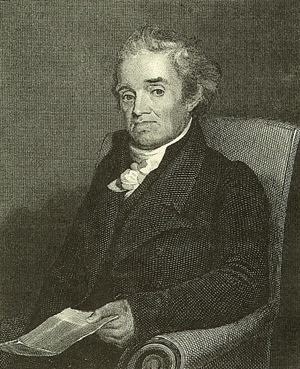
- Below you will find three sketches from a talented artist and friend depicting Noah Webster at work. Please tell us what you think.
Divine Study
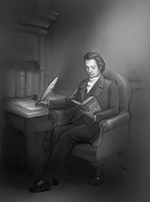 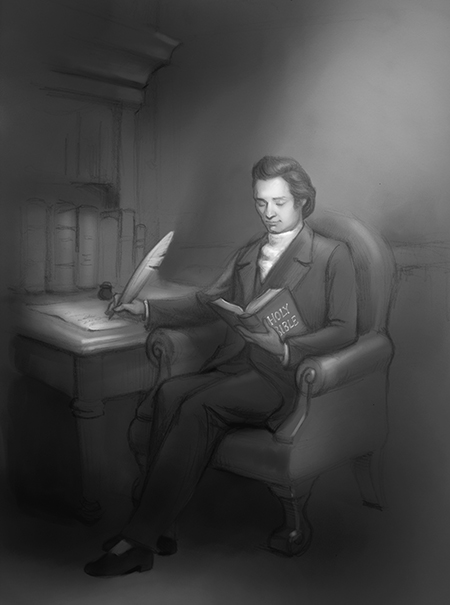
Divine Study
|
Window of Reflection
 
Window of Reflection
|
Enlightening Grace
 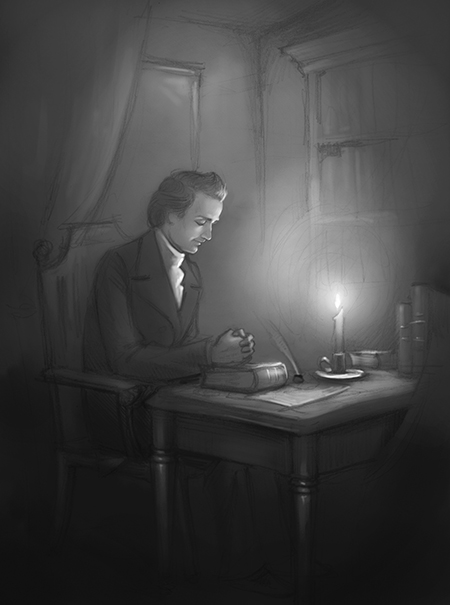
Enlightening Grace
|
164
|
949 |
125
|
1032 |
199
|
1068 |

Mind MIND, noun [Latin reminiscor; Latin mens; Gr. memory, mention, to remember, mind ardor of mind vehemence; anger. mind signifies properly intention, a reaching or inclining forward to an object, from the primary sense of extending, stretching or inclining, or advancing eagerly, pushing or setting forward, whence the Greek sense of the word, in analogy with the Teutonic mod, moed, muth, mind courage, spirit, mettle. So Latin animus, animosus.] 1. Intention; purpose; design. The sacrifice of the wicked is abomination; how much more, when he bringeth it with a wicked mind Proverbs 21:27. 2. Inclination; will; desire; a sense much used, but expressing less than settled purpose; as in the common phrases, 'I wish to know your mind; ' 'let me know your mind; ' 'he had a mind to go; ' 'he has a partner to his mind ' 3. Opinion; as, to express one's mind We are of one mind 4. Memory; remembrance; as, to put one in mind; to call to mind; the fact is out of my mind; time out of mind From the operations of the intellect in man, this word came to signify. 5. The intellectual or intelligent power in man; the understanding; the power that conceives, judges or reasons. I fear I am not in my perfect mind So we speak of a sound mind a disordered mind a weak mind a strong mind with reference to the active powers of the understanding; and in a passive sense, it denotes capacity, as when we say, the mind cannot comprehend a subject. 6. The heart or seat of affection. Which were a grief of mind to Isaac and Rebekah. Genesis 26:35. 7. The will and affection; as readiness of mind Acts 17:11. 8. The implanted principle of grace. Romans 7:23. MIND, verb transitive To attend to; to fix the thoughts on; to regard with attention. Cease to request me; let us mind our way. MIND not high things. Romans 12:2. 1. To attend to or regard with submission; to obey. His father told him to desist, but he would not mind him. 2. To put in mind; to remind. 3. To intend; to mean. MIND, verb intransitive To be inclined or disposed to incline. When one of them mindeth to go into rebellion. |

|
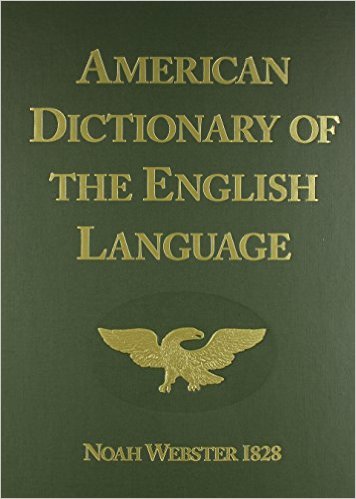
| Hard-cover Edition |
382 |
 |
561 |
|
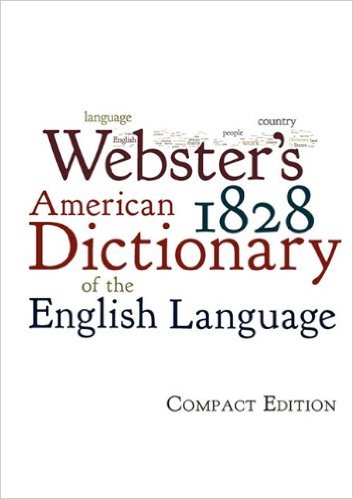
| Compact Edition |
366 |
 |
255 |
|
| CD-ROM |
321 |
 |
200 |
|
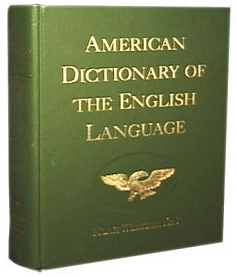
* As a note, I have purchased each of these products. In fact, as we have been developing the Project:: 1828 Reprint, I have purchased several of the bulky hard-cover dictionaries. My opinion is that the 2000-page hard-cover edition is the only good viable solution at this time. The compact edition was a bit disappointing and the CD-ROM as well. |
| [ + ] |
| Add Search To Your Site |
|
|
|