HOME
SIGN UP LOGIN
https://1828.mshaffer.com
Thursday - September 10, 2026

In my view, the Christian religion is the most important and one of the first things in which all children, under a free government ought to be instructed... No truth is more evident to my mind than that the Christian religion must be the basis of any government intended to secure the rights and privileges of a free people.
- Preface

1828 Noah Webster Dictionary
  A B C D E F G H I J K L M N O P Q R S T U V W X Y Z   <3

Search, browse, and study this dictionary to learn more about the early American, Christian language.

1828.mshaffer.comWord [spit]

0
0
Cite this! Share Definition on Facebook Share Definition on Twitter Simple Definition Word-definition Evolution

spit

SPIT, n. [G.]

1. An iron prong or bar pointed, on which meat is roasted.

2. Such depth of earth as is pierced by the spade at once. [D. spit, a spade.]

3. A small point of land running into the sea, or a long narrow shoal extending from the shore into the sea; as a spit of sand.

SPIT, v.t. [from the noun.]

1. To thrust a spit through; to put upon a spit; as, to spit a loin of veal.

2. To thrust through; to pierce.

SPIT, v.t. pret. and pp. spit. Spat is obsolete. [G. The sense is to throw or drive.]

1. To eject from the mouth; to thrust out, as saliva or other matter from the mouth.

2. To eject or throw out with violence.

SPIT, v.i. To throw out saliva from the mouth. It is a dirty trick to spit on the floor or carpet.

SPIT, n. What is ejected from the mouth; saliva.


Evolution (or devolution) of this word [spit]

1828 Webster1844 Webster1913 Webster

SPIT, n. [G.]

1. An iron prong or bar pointed, on which meat is roasted.

2. Such depth of earth as is pierced by the spade at once. [D. spit, a spade.]

3. A small point of land running into the sea, or a long narrow shoal extending from the shore into the sea; as a spit of sand.

SPIT, v.t. [from the noun.]

1. To thrust a spit through; to put upon a spit; as, to spit a loin of veal.

2. To thrust through; to pierce.

SPIT, v.t. pret. and pp. spit. Spat is obsolete. [G. The sense is to throw or drive.]

1. To eject from the mouth; to thrust out, as saliva or other matter from the mouth.

2. To eject or throw out with violence.

SPIT, v.i. To throw out saliva from the mouth. It is a dirty trick to spit on the floor or carpet.

SPIT, n. What is ejected from the mouth; saliva.


SPIT, n.1 [Sax. spitu; D. spit; G. spiess; Sw. spett; Dan. spid; It. spiedo; Ice. spiet, a spear. It belongs to Class Bd, and is from thrusting, shooting.]

  1. An iron prong or bar pointed, on which meat is roasted.
  2. Such a depth of earth as is pierced by the spade at once. [D. spit, a spade.] – Mortimer.
  3. A small point of land running into the sea, or a long narrow shoal extending from the shore into the sea; as, a spit of sand.

SPIT, n.2 [Dan. spyt.]

What is ejected from the mouth; saliva.


SPIT, v.i.

To throw out saliva from the mouth. It is a dirty trick to spit on the floor or carpet.


SPIT, v.t.1 [from the noun.]

  1. To thrust a spit through; Put upon a spit; as, to spit a loin of veal.
  2. To thrust through; to pierce. – Dryden.
  3. To spade; to dig.

SPIT, v.t.2 [pret. and pp. spit. Spat is obsolete. Sax. spitan; Sw. spotta; Dun. spytter; G. spützen. The sense is to throw or drive. Class Bd.]

  1. To eject from the mouth; to thrust out, as saliva or other matter from the mouth.
  2. To eject or throw out with violence.

Spit
  1. A long, slender, pointed rod, usually of iron, for holding meat while roasting.
  2. To thrust a spit through; to fix upon a spit; hence, to thrust through or impale; as, to spit a loin of veal.

    "Infants spitted upon pikes." Shak.
  3. To attend to a spit; to use a spit.

    [Obs.]

    She's spitting in the kitchen. Old Play.

  4. To eject from the mouth; to throw out, as saliva or other matter, from the mouth.

    "Thus spit I out my venom." Chaucer.
  5. The secretion formed by the glands of the mouth; spitle; saliva; sputum.
  6. To throw out saliva from the mouth.
  7. A small point of land running into the sea, or a long, narrow shoal extending from the shore into the sea; as, a spit of sand.

    Cook.
  8. To spade; to dig.

    [Prov. Eng.]
  9. To eject; to throw out; to belch.

    * Spitted was sometimes used as the preterit and the past participle. "He . . . shall be mocked, and spitefully entreated, and spitted on." Luke xviii. 32.

  10. To rain or snow slightly, or with sprinkles.

    It had been spitting with rain. Dickens.

    To spit on or upon, to insult grossly; to treat with contempt. "Spitting upon all antiquity." South.

  11. The depth to which a spade goes in digging; a spade; a spadeful.

    [Prov. Eng.] Halliwell.
1828 Webster1844 Webster1913 Webster

Thank you for visiting!

  • Our goal is to try and improve the quality of the digital form of this dictionary being historically true and accurate to the first American dictionary. Read more ...
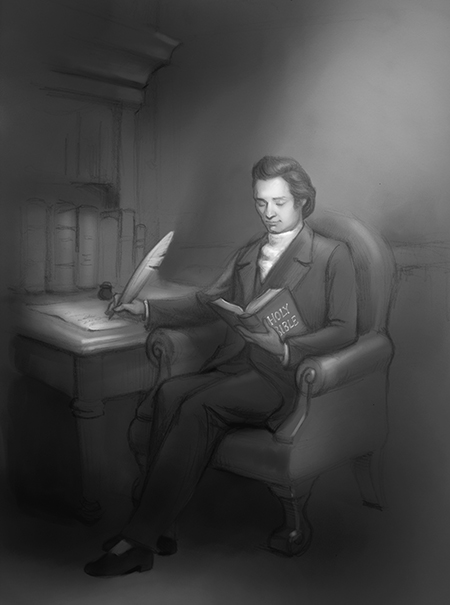
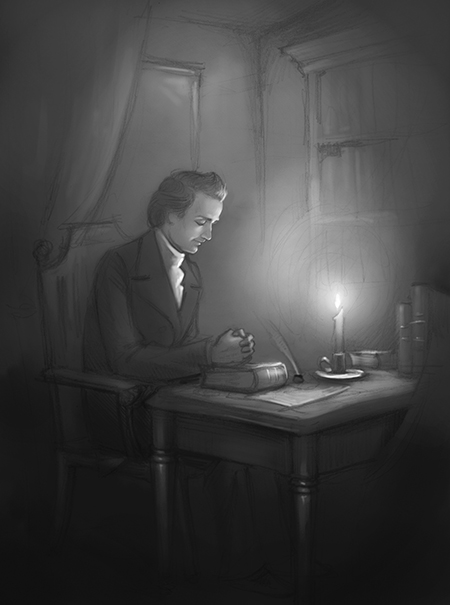
  • Below you will find three sketches from a talented artist and friend depicting Noah Webster at work. Please tell us what you think.
Divine Study
  • Divine StudyDivine Study
    Divine Study
Window of Reflection
  • Window of ReflectionWindow of Reflection
    Window of Reflection
Enlightening Grace
  • Enlightening GraceEnlightening Grace
    Enlightening Grace

164

951

126

1035

199

1074
Spit

SPIT, noun [G.]

1. An iron prong or bar pointed, on which meat is roasted.

2. Such depth of earth as is pierced by the spade at once. [D. spit a spade.]

3. A small point of land running into the sea, or a long narrow shoal extending from the shore into the sea; as a spit of sand.

SPIT, verb transitive [from the noun.]

1. To thrust a spit through; to put upon a spit; as, to spit a loin of veal.

2. To thrust through; to pierce.

SPIT, verb transitive preterit tense and participle passive spit Spat is obsolete. [G. The sense is to throw or drive.]

1. To eject from the mouth; to thrust out, as saliva or other matter from the mouth.

2. To eject or throw out with violence.

SPIT, verb intransitive To throw out saliva from the mouth. It is a dirty trick to spit on the floor or carpet.

SPIT, noun What is ejected from the mouth; saliva.

Why 1828?

Word of the Day

importance

IMPORT'ANCE, n.

1. Weight; consequence; a bearing on some interest; that quality of any thing by which it may affect a measure, interest or result. The education of youth is of great importance to a free government. A religious education is of infinite importance to every human being.

2. Weight or consequence in the scale of being.

Thy own importance know.

Nor bound thy narrow views to things below.

3. Weight or consequence in self-estimation.

He believes himself a man of importance.

4. Thing implied; matter; subject; importunity. [In these senses, obsolete.]

Random Word

distance

DISTANCE, n. [L., to stand apart; to stand.]

1. An interval or space between two objects; the length of the shortest line which intervenes between two things that are separate; as a great or small distance. Distance may be aline, an inch, a mile, or any indefinite length; as the distance between the sun and Saturn.

2. Preceded by at, remoteness of place.

He waits at distance till he hears from Cato.

3. Preceded by thy, his, your, her, their, a suitable space, or such remoteness as is common or becoming; as, let him keep his distance; keep your distance. [See No. 8.]

4. A space marked on the course where horses run.

This horse ran the whole field out of distance.

5. Space of time; any indefinite length of time, past or future, intervening between two periods or events; as the distance of an hour, of a year, of an age.

6. Ideal space or separation.

Qualities that affect our senses are, in the things themselves, so united and blended, that there is no distance between them.

7. Contrariety; opposition.

Banquo was your enemy, so he is mine, and in such bloody distance--

8. The remoteness which respect requires; hence, respect.

I hope your modesty will know what distance to the crown is due.

Tis by respect and distance that authority is upheld.

[See No. 3]

9. Reserve; coldness; alienation of heart.

On the part of heaven now alientated, distance and distaste.

10. Remoteness in succession or relation; as the distance between a descendant and his ancestor.

11. In music, the interval between two notes; as the distance of a fourth or seventh.

DISTANCE, v.t.

1. To place remote; to throw off from the view.

2. To leave behind in a race;; to win the race by a great superiority.

3. To leave at a great distance behind.

He distanced the most skillful of his cotemporaries.

Noah's 1828 Dictionary

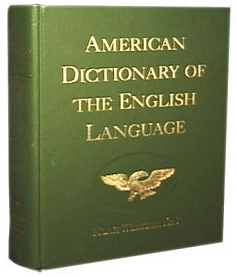
First dictionary of the American Language!

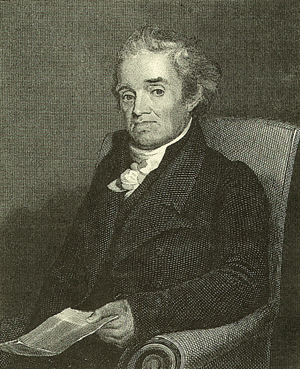
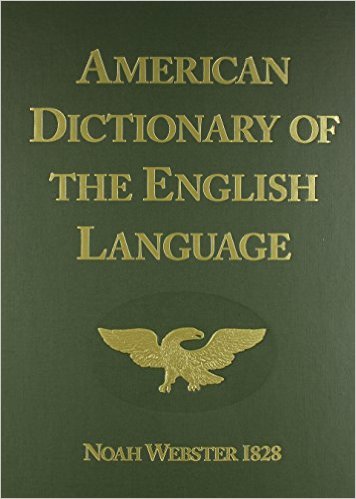
Noah Webster, the Father of American Christian education, wrote the first American dictionary and established a system of rules to govern spelling, grammar, and reading. This master linguist understood the power of words, their definitions, and the need for precise word usage in communication to maintain independence. Webster used the Bible as the foundation for his definitions.

This standard reference tool will greatly assist students of all ages in their studies.

No other dictionary compares with the Webster's 1828 dictionary. The English language has changed again and again and in many instances has become corrupt. The American Dictionary of the English Language is based upon God's written word, for Noah Webster used the Bible as the foundation for his definitions. This standard reference tool will greatly assist students of all ages in their studies. From American History to literature, from science to the Word of God, this dictionary is a necessity. For homeschoolers as well as avid Bible students it is easy, fast, and sophisticated.


Regards,


monte

{x:

Project:: 1828 Reprint


Hard-cover Edition

382

562

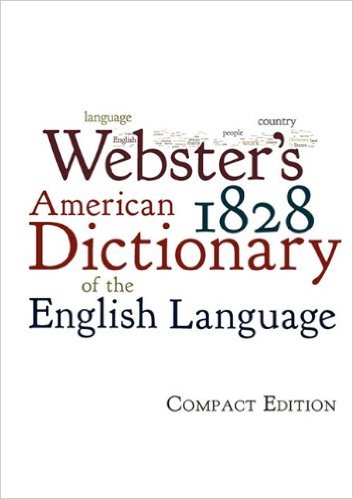
Compact Edition

369

255

CD-ROM

325

201

* As a note, I have purchased each of these products. In fact, as we have been developing the Project:: 1828 Reprint, I have purchased several of the bulky hard-cover dictionaries. My opinion is that the 2000-page hard-cover edition is the only good viable solution at this time. The compact edition was a bit disappointing and the CD-ROM as well.


[ + ]
Add Search To Your Site


Our goal is to convert the facsimile dictionary (PDF available: v1 and v2) to reprint it and make it digitally available in several formats.

Overview of Project

  1. Image dissection
  2. Text Emulation
  3. Dictionary Formatting
  4. Digital Applications
  5. Reprint

Please visit our friends:

{ourFriends}

Learn more about U.S. patents:

{ourPatent}

Privacy Policy

We want to provide the best 1828 dictionary service to you. As such, we collect data, allow you to login, and we want your feedback on other features you would like.

For details of our terms of use, please read our privacy policy here.

Page loaded in 0.919 seconds. [1828: 22, T:0]


1828 Noah Webster Dictionary

^ return to top
Back to Top