|
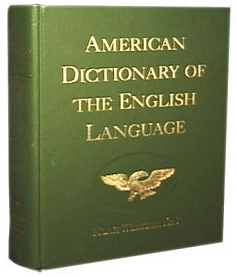
Search, browse, and study this dictionary to learn more about the early American, Christian language. 
1828.mshaffer.com › Word [t]
T is the twentieth letter of the English Alphabet, and a close consonant. It represents a close joining of the end of the tongue to the root of the upper teeth, as may be perceived by the syllables at, et, ot, ut, in attempting to pronounce which, the voice is completely intercepted. It is therefore numbered among the mutes, or close articulations, and it differs from d chiefly in its closeness; for in pronouncing ad, ed, we perceive the voice is not so suddenly and entirely intercepted, as in pronouncing at and et. T by itself has one sound only, as in take, turn, bat, bolt, smite, bitter. So we are accustomed to speak; but in reality, t can be hardly said to have any sound at all. Its use, like that of all mute articulations, is to modify the manner of uttering the vocal sound which precedes or follows it. When t is followed by h, as in think and that, the combination really forms a distinct sound for which we have no single character. This combination has two sounds in English; aspirated, as in think, and vocal, as in that.The letters ti, before a vowel, and unaccented, usually pass into the sound of sh, as in nation, motion, partial substantiate; which are pronounced nashon, moshon, parshal, substanshate. In the case, t loses entirely its proper sound or use, and being blended with the subsequent letter, a new sound results from the combination, which is in fact a simple sound. In a few words, the combination ti has the sound of the English ch, as in Christian, mixtion, question.T, as an abbreviation, stands for theologia; as, S.T.D. sanctoe theologioe doctor, doctor of divinity. In ancient monuments and writings, T is an abbreviature, which stands for Titus, Titius or Tullius. As a numeral, T, among the Latins, stood for 160, and with a dash over the top, T, for 160,000.In music, T is the initial of tenor, vocal and instrumental; of tacet, for silence, as adagio tacet, when a person is to rest during the whole movement. In concertos and symphonies, it is the initial of tutti, the whole band, after a solo. It sometimes stands for tr. or trillo, a shake.
|
Evolution (or devolution) of this word [t]
| 1828 Webster | 1844 Webster | 1913 Webster |
|---|
T is the twentieth letter of the English Alphabet, and a close consonant. It represents a close joining of the end of the tongue to the root of the upper teeth, as may be perceived by the syllables at, et, ot, ut, in attempting to pronounce which, the voice is completely intercepted. It is therefore numbered among the mutes, or close articulations, and it differs from d chiefly in its closeness; for in pronouncing ad, ed, we perceive the voice is not so suddenly and entirely intercepted, as in pronouncing at and et. T by itself has one sound only, as in take, turn, bat, bolt, smite, bitter. So we are accustomed to speak; but in reality, t can be hardly said to have any sound at all. Its use, like that of all mute articulations, is to modify the manner of uttering the vocal sound which precedes or follows it. When t is followed by h, as in think and that, the combination really forms a distinct sound for which we have no single character. This combination has two sounds in English; aspirated, as in think, and vocal, as in that.The letters ti, before a vowel, and unaccented, usually pass into the sound of sh, as in nation, motion, partial substantiate; which are pronounced nashon, moshon, parshal, substanshate. In the case, t loses entirely its proper sound or use, and being blended with the subsequent letter, a new sound results from the combination, which is in fact a simple sound. In a few words, the combination ti has the sound of the English ch, as in Christian, mixtion, question.T, as an abbreviation, stands for theologia; as, S.T.D. sanctoe theologioe doctor, doctor of divinity. In ancient monuments and writings, T is an abbreviature, which stands for Titus, Titius or Tullius. As a numeral, T, among the Latins, stood for 160, and with a dash over the top, T, for 160,000.In music, T is the initial of tenor, vocal and instrumental; of tacet, for silence, as adagio tacet, when a person is to rest during the whole movement. In concertos and symphonies, it is the initial of tutti, the whole band, after a solo. It sometimes stands for tr. or trillo, a shake. |
T,is the twentieth letter of the English Alphabet, and a close consonant. It represents a close joining of the end of the tongue to the root of the upper teeth, as may be perceived by the syllable at, et, ot, ut, in attempting to pronounce which, the voice is completely intercepted. It is therefore numbered among the mutes, or close articulations, and it differs from d chiefly in its closeness; for in pronouncing ad, ed, we perceive the voice is not so suddenly and entirely intercepted, as in pronouncing at and et. T by itself has one sound only, as in take, turn, bat, bolt, smite, bitter. So we are accustomed to speak; but in reality, t can be hardly said to have any sound at all. Its use, like that of all mute articulations, is to modify the manner of uttering the vocal sound which precedes or follows it.
When t is followed by h, as in think and that, the combination really forms a distinct sound for which we have no single character. This combination has two sounds in English; aspirated, as in think, and vocal as in that.
The letters ti, before a vowel, and unaccented, usually pass into the sound of sh, as in nation, motion, partial, substantiate; which are pronounced nashon, moshon, parshal, substanshate. In this case, t loses entirely its proper sound or use, and being blended with the subsequent letter, a new sound results from the combination, which is in fact a simple sound. In a few words, the combination ti has the sound of English ch, as in Christian, mixtion, question.
T is convertible with d. Thus the Germans write tag, where we write day, and gut for good. It is also convertible with s and z, for the Germans write wasser, for water, and zahm, for tame. T. as an abbreviation, stands for theologia; as, S. T. D. sanctæ theologiæ doctor, doctor of divinity. In ancient monuments and writings, T. is an abbreviature which stands for Titus, Titius, or Tullius.
As a numeral, T, among the Latins, stood for 160, and with a dash over the top, [T with super-macron], for 160,000. Encyc.
In music, T, is the initial of tenor, vocal and instrumental; of tacet, for silence, as adagio tacet, when a person is to rest during the whole movement. In concertos and symphonies, it is the initial of tutti, the whole band, after a solo. It sometimes stands for tr. or trillo, a shake. |
T
- the twentieth letter of the English
alphabet, is a nonvocal consonant. With the letter h it forms the
digraph th, which has two distinct sounds, as in thin,
then. See Guide to Pronunciation, §𨵞-264, and
also §𨳱, 156, 169, 172, 176, 178-180.
|
| 1828 Webster | 1844 Webster | 1913 Webster |
|---|
Thank you for visiting!
- Our goal is to try and improve the quality of the digital form of this dictionary being historically true and accurate to the first American dictionary. Read more ...
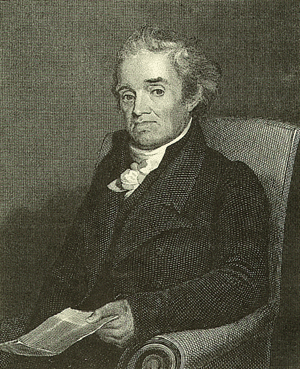
- Below you will find three sketches from a talented artist and friend depicting Noah Webster at work. Please tell us what you think.
Divine Study
 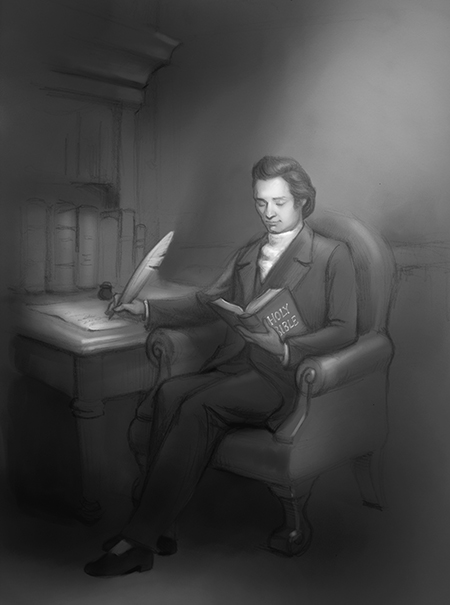
Divine Study
|
Window of Reflection
 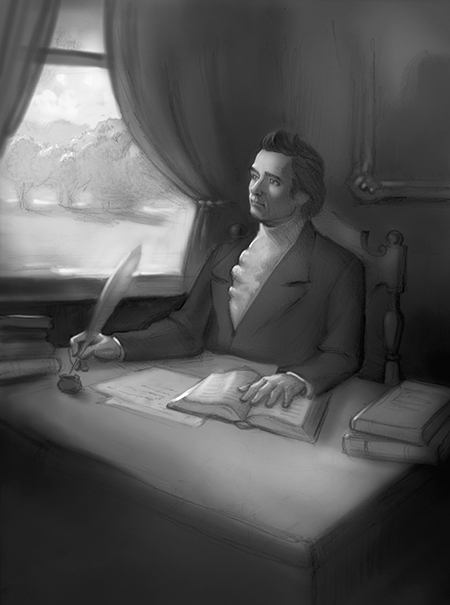
Window of Reflection
|
Enlightening Grace
 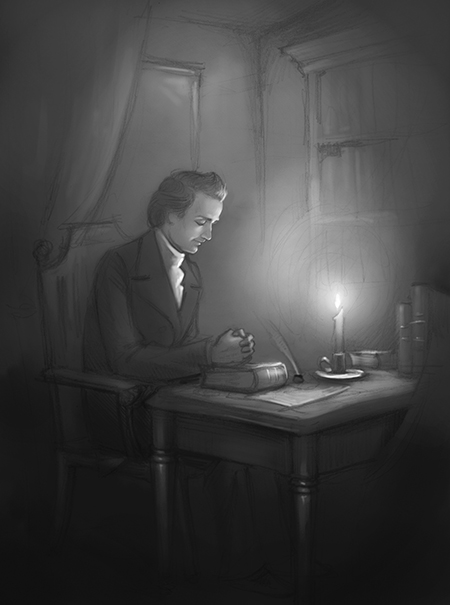
Enlightening Grace
|
164
|
955 |
126
|
1037 |
199
|
1078 |

T T is the twentieth letter of the English Alphabet, and a close consonant. It represents a close joining of the end of the tongue to the root of the upper teeth, as may be perceived by the syllables at, et, ot, ut, in attempting to pronounce which, the voice is completely intercepted. It is therefore numbered among the mutes, or close articulations, and it differs from d chiefly in its closeness; for in pronouncing ad, ed, we perceive the voice is not so suddenly and entirely intercepted, as in pronouncing at and et. T by itself has one sound only, as in take, turn, bat, bolt, smite, bitter. So we are accustomed to speak; but in reality, t can be hardly said to have any sound at all. Its use, like that of all mute articulations, is to modify the manner of uttering the vocal sound which precedes or follows it. When t is followed by h, as in think and that, the combination really forms a distinct sound for which we have no single character. This combination has two sounds in English; aspirated, as in think, and vocal, as in that. The letters ti, before a vowel, and unaccented, usually pass into the sound of sh, as in nation, motion, partial substantiate; which are pronounced nashon, moshon, parshal, substanshate. In the case, t loses entirely its proper sound or use, and being blended with the subsequent letter, a new sound results from the combination, which is in fact a simple sound. In a few words, the combination ti has the sound of the English ch, as in Christian, mixtion, question. T, as an abbreviation, stands for theologia; as, S.T.D. sanctoe theologioe doctor, doctor of divinity. In ancient monuments and writings, T is an abbreviature, which stands for Titus, Titius or Tullius. As a numeral, T, among the Latins, stood for 160, and with a dash over the top, T, for 160, 000. In music, T is the initial of tenor, vocal and instrumental; of tacet, for silence, as adagio tacet, when a person is to rest during the whole movement. In concertos and symphonies, it is the initial of tutti, the whole band, after a solo. It sometimes stands for tr. or trillo, a shake. |

|
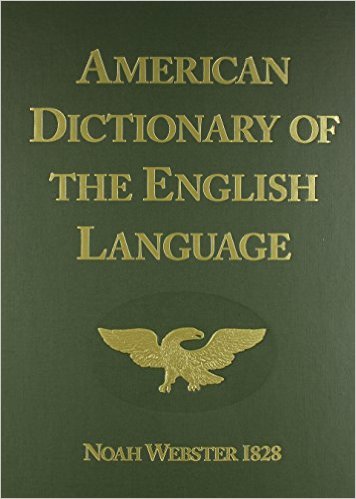
| Hard-cover Edition |
385 |
 |
566 |
|
| Compact Edition |
369 |
 |
259 |
|
| CD-ROM |
326 |
 |
202 |
|
* As a note, I have purchased each of these products. In fact, as we have been developing the Project:: 1828 Reprint, I have purchased several of the bulky hard-cover dictionaries. My opinion is that the 2000-page hard-cover edition is the only good viable solution at this time. The compact edition was a bit disappointing and the CD-ROM as well. |
| [ + ] |
| Add Search To Your Site |
|
|
|