HOME
SIGN UP LOGIN
https://1828.mshaffer.com
Friday - October 23, 2026
↓

In my view, the Christian religion is the most important and one of the first things in which all children, under a free government ought to be instructed... No truth is more evident to my mind than that the Christian religion must be the basis of any government intended to secure the rights and privileges of a free people.
- Preface

1828 Noah Webster Dictionary
  A B C D E F G H I J K L M N O P Q R S T U V W X Y Z   <3

Search, browse, and study this dictionary to learn more about the early American, Christian language.

1828.mshaffer.com › Word [transit]

0
0
Cite this! Share Definition on Facebook Share Definition on Twitter Simple Definition Word-definition Evolution

transit

TRANS'IT, n. [L. transitus, from transeo.]

1. A passing; a passing over or through; conveyance; as the transit of goods through a country.

2. In astronomy, the passing of one heavenly body over the disk of another and larger. I witnessed the transit of Venus over the sun's disk, June 3, 1769. When a smaller body passes behind a larger, it is said to suffer an occultation.

3. The passage of one heavenly body over the meridian of another.

TRANS'IT, v.t. To pass over the disk of a heavenly body.


Evolution (or devolution) of this word [transit]

1828 Webster1844 Webster1913 Webster

TRANS'IT, n. [L. transitus, from transeo.]

1. A passing; a passing over or through; conveyance; as the transit of goods through a country.

2. In astronomy, the passing of one heavenly body over the disk of another and larger. I witnessed the transit of Venus over the sun's disk, June 3, 1769. When a smaller body passes behind a larger, it is said to suffer an occultation.

3. The passage of one heavenly body over the meridian of another.

TRANS'IT, v.t. To pass over the disk of a heavenly body.


TRANS'IT, n. [L. transitus, from transeo.]

  1. A passing; a passing over or through; conveyance; as, the transit of goods through a country.
  2. In astronomy, the passing of one heavenly body over the disk of another and larger. I witnessed the transit of Venus over the sun's disk, June 3, 1769. When a smaller body passes behind a larger, it is said to suffer an occultation.
  3. The passage of one heavenly body over the meridian of another.

TRANS'IT, v.t.

To pass over the disk of a heavenly body. Cyc.


Trans"it
  1. The act of passing; passage through or over.

    In France you are now . . . in the transit from one form of government to another. Burke.

  2. To pass over the disk of (a heavenly body).
  3. The act or process of causing to pass; conveyance; as, the transit of goods through a country.
  4. A line or route of passage or conveyance; as, the Nicaragua transit.

    E. G. Squier.
  5. The passage of a heavenly body over the meridian of a place, or through the field of a telescope.

    (b)
  6. An instrument resembling a theodolite, used by surveyors and engineers; -- called also transit compass, and surveyor's transit.

    * The surveyor's transit differs from the theodolite in having the horizontal axis attached directly to the telescope which is not mounted in Y's and can be turned completely over about the axis.

    Lower transit (Astron.), the passage of a heavenly body across that part of the meridian which is below the polar axis. -- Surveyor's transit. See Transit, 5, above. -- Transit circle (Astron.), a transit instrument with a graduated circle attached, used for observing the time of transit and the declination at one observation. See Circle, n., 3. -- Transit compass. See Transit, 5, above. -- Transit duty, a duty paid on goods that pass through a country. -- Transit instrument. (Astron.) (a) A telescope mounted at right angles to a horizontal axis, on which it revolves with its line of collimation in the plane of the meridian, -- used in connection with a clock for observing the time of transit of a heavenly body over the meridian of a place. (b) (Surv.) A surveyor's transit. See Transit, 5, above. -- Transit trade (Com.), the business conected with the passage of goods through a country to their destination. -- Upper transit (Astron.), the passage of a heavenly body across that part of the meridian which is above the polar axis.

1828 Webster1844 Webster1913 Webster

Thank you for visiting!

  • Our goal is to try and improve the quality of the digital form of this dictionary being historically true and accurate to the first American dictionary. Read more ...
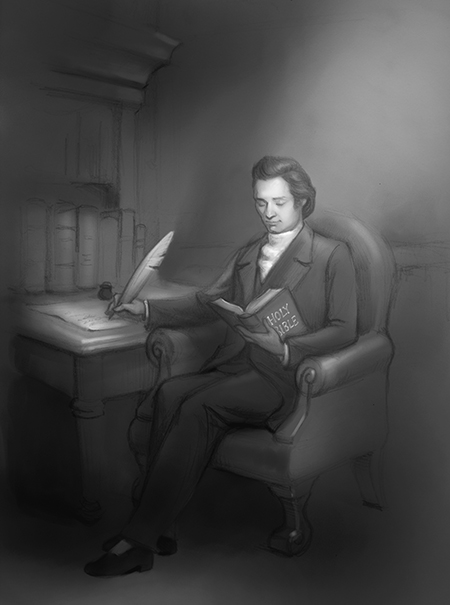
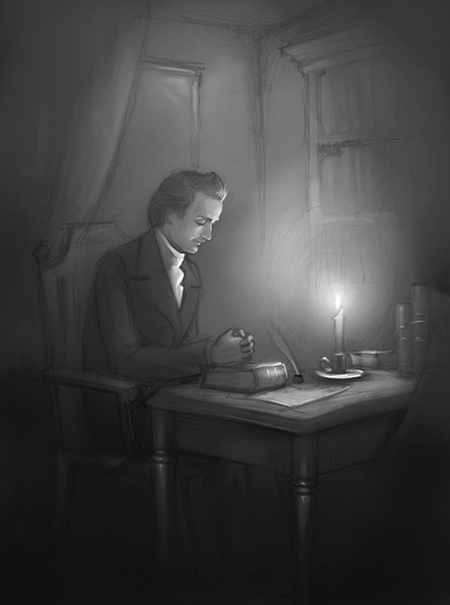
  • Below you will find three sketches from a talented artist and friend depicting Noah Webster at work. Please tell us what you think.
Divine Study
  • Divine StudyDivine Study
    Divine Study
Window of Reflection
  • Window of ReflectionWindow of Reflection
    Window of Reflection
Enlightening Grace
  • Enlightening GraceEnlightening Grace
    Enlightening Grace

164

955

126

1037

199

1078
Transit

TRANS'IT, noun [Latin transitus, from transeo.]

1. A passing; a passing over or through; conveyance; as the transit of goods through a country.

2. In astronomy, the passing of one heavenly body over the disk of another and larger. I witnessed the transit of Venus over the sun's disk, June 3, 1769. When a smaller body passes behind a larger, it is said to suffer an occultation.

3. The passage of one heavenly body over the meridian of another.

TRANS'IT, verb transitive To pass over the disk of a heavenly body.

Why 1828?

Word of the Day

importance

IMPORT'ANCE, n.

1. Weight; consequence; a bearing on some interest; that quality of any thing by which it may affect a measure, interest or result. The education of youth is of great importance to a free government. A religious education is of infinite importance to every human being.

2. Weight or consequence in the scale of being.

Thy own importance know.

Nor bound thy narrow views to things below.

3. Weight or consequence in self-estimation.

He believes himself a man of importance.

4. Thing implied; matter; subject; importunity. [In these senses, obsolete.]

Random Word

sure

SURE, a. shure. [L. assevero, and to be connected with swear, and perhaps with L. verus; s being the remains of a prefix.]

1. Certain; unfailing; infallible.

The testimony of the Lord is sure. Ps.19.

We have also a more sure word of prophecy. 2 Pet.1.

2. Certainly knowing, or having full confidence.

We are sure that the judgment of God is according to truth-- Rom.2.

Now we are sure that thou knowest all things. John 16.

3. Certain; safe; firm; permanent.

Thy kingdom shall be sure to thee. Dan.4.

4. Firm; stable; steady; not liable to failure, loss or change; as a sure covenant. 2 Sam. 23. Neh.9. Is.28.

The Lord will make my lord a sure house. 1 Sam.25.

So we say, to stand sure, to be sure of foot.

5. Certain of obtaining or of retaining; as, to be sure of game; to be sure of success; to be sure of life or health.

6. Strong; secure; not liable to be broken or disturbed.

Go your way, make it as sure as ye can. Math.27.

7. Certain; not liable to failure. The income is sure.

To be sure, or be sure, certainly. Shall you go? be sure I shall.

To make sure, to make certain; to secure so that there can be no failure of the purpose or object.

Make sure of Cato.

A peace cannot fail, provided we make sure of Spain.

Give all diligence to make your calling and election sure. 2 Pet. 1.

SURE, adv. Certainly; without doubt; doubtless.

Sure the queen would wish him still unknown.

[But in this sense, surely is more generally used.]

Noah's 1828 Dictionary

First dictionary of the American Language!

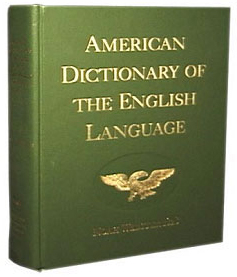
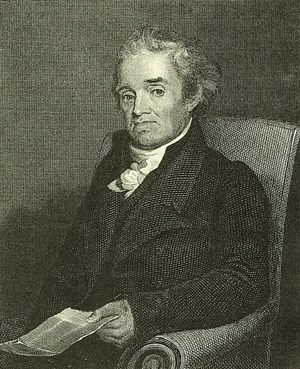
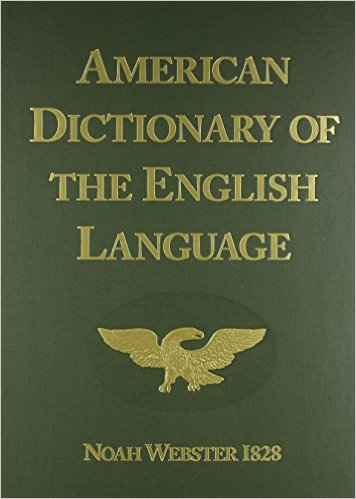
Noah Webster, the Father of American Christian education, wrote the first American dictionary and established a system of rules to govern spelling, grammar, and reading. This master linguist understood the power of words, their definitions, and the need for precise word usage in communication to maintain independence. Webster used the Bible as the foundation for his definitions.

This standard reference tool will greatly assist students of all ages in their studies.

No other dictionary compares with the Webster's 1828 dictionary. The English language has changed again and again and in many instances has become corrupt. The American Dictionary of the English Language is based upon God's written word, for Noah Webster used the Bible as the foundation for his definitions. This standard reference tool will greatly assist students of all ages in their studies. From American History to literature, from science to the Word of God, this dictionary is a necessity. For homeschoolers as well as avid Bible students it is easy, fast, and sophisticated.


Regards,


monte

{x:

Project:: 1828 Reprint


Hard-cover Edition

385

566

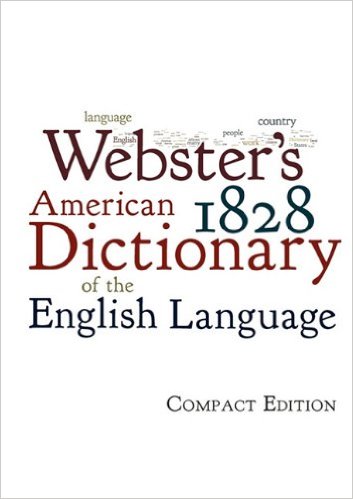
Compact Edition

369

259

CD-ROM

326

202

* As a note, I have purchased each of these products. In fact, as we have been developing the Project:: 1828 Reprint, I have purchased several of the bulky hard-cover dictionaries. My opinion is that the 2000-page hard-cover edition is the only good viable solution at this time. The compact edition was a bit disappointing and the CD-ROM as well.


[ + ]
Add Search To Your Site


Our goal is to convert the facsimile dictionary (PDF available: v1 and v2) to reprint it and make it digitally available in several formats.

Overview of Project

  1. Image dissection
  2. Text Emulation
  3. Dictionary Formatting
  4. Digital Applications
  5. Reprint

Please visit our friends:

{ourFriends}

Learn more about U.S. patents:

{ourPatent}

Privacy Policy

We want to provide the best 1828 dictionary service to you. As such, we collect data, allow you to login, and we want your feedback on other features you would like.

For details of our terms of use, please read our privacy policy here.

Page loaded in 1.389 seconds. [1828: 22, T:0]


1828 Noah Webster Dictionary

^ return to top
Back to Top